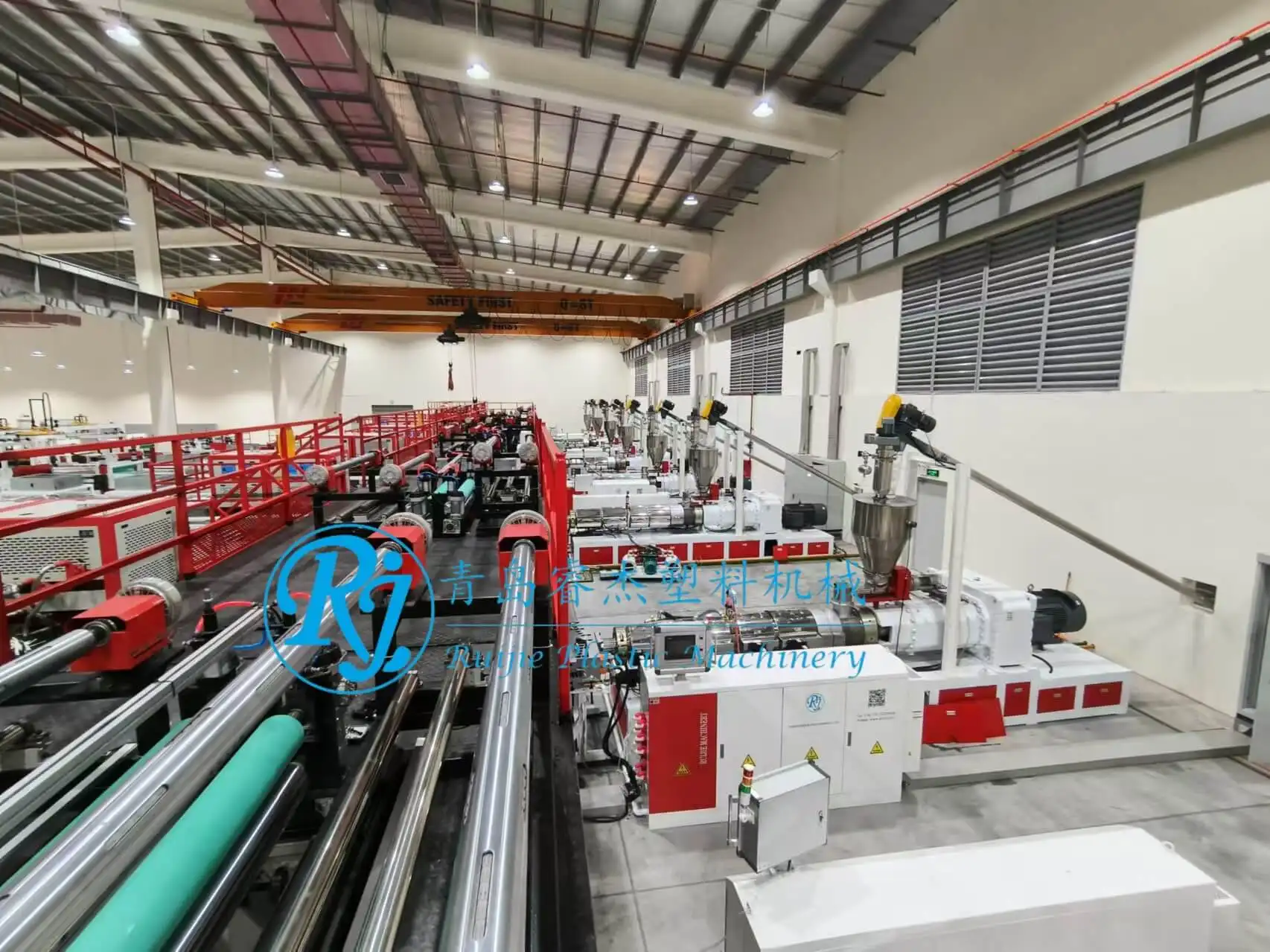
Road Infrastructure Reinvention with Recycled Plastic Boards
How plastic board and sheet production lines convert post-consumer PET/PP waste into durable road base sheets
New plastic board and sheet manufacturing setups are turning old PET bottles and PP containers into actual road building materials these days. The process involves shredding, melting down, then pressing everything together. When they heat up those used plastics between around 200 to maybe 280 degrees Celsius, it creates this uniform polymer mix that sticks really well to minerals and sand to make waterproof composite sheets for roads. What makes this approach so great is that it keeps tons of plastic out of landfills while making road bases that can handle impacts about 2.5 times better than regular asphalt according to some recent studies published in sustainable infrastructure journals. These special sheets stop potholes from forming because they don't let water seep through and crack under temperature changes something super important for busy highways and main roads where traffic never stops. Take India for example where over 33 thousand kilometers of roads now incorporate recycled plastic waste equivalent to roughly a million plastic bags being reused every single kilometer laid down.
Case study: Modular EPS–PP hybrid line enabling Shandong’s 2023 plastic-road pilot
A Shandong-based manufacturer deployed a modular plastic board and sheet production line combining expanded polystyrene (EPS) beads with recycled PP to create hybrid road panels for China’s coastal highway initiative. This configuration processed 12 tonnes/hour of mixed plastic waste into 3 m × 2.5 m interlocking sheets featuring:
- Load-bearing reinforcement: Steel mesh embedded during extrusion
- Thermal stability: UV stabilizers preventing deformation at 50°C+
- Rapid installation: Tongue-and-groove joints enabling 500 m/day deployment
The pilot replaced 30% of traditional bitumen with recycled polymers, reducing material costs by ¥420,000 per kilometer while extending maintenance intervals by 40% compared to conventional roads. This approach demonstrates how automated production systems enable circular material flows in infrastructure development.
Lightweight, Sterile Packaging Solutions from Automated Plastic Board and Sheet Production Lines
E-commerce demand driving PP corrugated sheet adoption for stackable, impact-resistant packaging
The rise of online shopping has created a big need for packaging that's both tough and light weight, which is why more companies are turning to polypropylene (PP) corrugated sheets. These materials actually weigh about 40 percent less than regular cardboard but still hold up really well against impacts. That matters a lot because studies show around 19% of fragile items get damaged during shipping according to Packaging Digest from last year. Factories now have automated systems for producing these plastic boards and sheets in large quantities. They can create interlocking designs that stop products from moving around inside boxes during transport. Another plus point is that certain types of PP can handle multiple cleaning cycles without breaking down, so they work great for things like medicine packaging or food containers where keeping everything clean is absolutely essential. Plus, when stored properly, these packages stack much better than odd shaped boxes do, letting warehouses fit about 30% more stuff vertically on their shelves.
Co-extrusion and inline embossing innovations in modern plastic board and sheet production line configurations
Advanced plastic sheet packaging applications leverage co-extrusion technology within automated production lines to create multi-layer sheets with tailored functional properties. By combining polymer layers in a single pass, manufacturers achieve:
- Barrier layers blocking oxygen and moisture penetration
- Structural cores providing rigidity with minimal material
- Surface-ready printing substrates
Inline embossing units take things a step further when it comes to functionality. They can imprint all sorts of features like anti-slip surfaces, brand logos, or even ventilation channels right during the extrusion process itself. What this means is manufacturers get to produce custom made rigid plastic boards that actually work better than many traditional materials out there, especially when certain weight bearing specs need to be met. The real kicker? These systems maintain super tight control over thickness variations within plus or minus 0.05 millimeters. That kind of precision makes all the difference for products ranging from medical device storage trays to protective cases for delicate electronics components. And let's not forget about waste reduction either. Compared to old school manufacturing methods, these advanced techniques cut down on material waste somewhere around 22 percent, which is pretty impressive if you ask me.
High-Performance Cladding and Facades Using PVC and Polycarbonate Sheets
Fire-retardant polycarbonate façade panels meeting net-zero building codes via precision sheet extrusion
Today's plastic board and sheet production facilities can actually produce fire resistant polycarbonate panels that meet and sometimes beat tough building safety requirements. During manufacturing, precise extrusion methods add special coatings that boost the material's natural qualities, getting them up to UL 94 V-0 ratings which is basically the gold standard for plastics that put themselves out when they catch fire. What makes these panels really stand out is their ability to cut down on smoke while still letting through about 90% of available light. This means buildings need 35% less artificial lighting than regular glass would require according to the Building Energy Efficiency Report from last year. And here's another plus point these coated systems work great even in super cold conditions down to minus 40 degrees Celsius or hot environments up to 120 degrees Celsius. They maintain their strength throughout all this temperature range, helping buildings manage heat passively and stay compliant with those increasingly common net zero energy goals.
UV-stabilized co-extruded PVC sheets replacing aluminum composites in coastal infrastructure projects
The co-extrusion process used in modern plastic sheet production makes some pretty tough PVC cladding options that work great in tough marine settings. These sheets come with built-in protection against UV damage right from the factory floor, stopping most of that harmful sunlight before it can cause problems like color fading or material breakdown seen in regular plastics. Lab tests have shown these materials keep their strength even after sitting out on the coast for around 15 years or so. That's way better than what happens to aluminum composites, which start showing signs of salt damage pretty quickly, usually between 5 to maybe 7 years at best. When put through salt spray tests, this layered construction lasts about ten times longer than normal aluminum panels, and folks who maintain these structures report cutting down on repairs by roughly two thirds. Cities all over are starting to go this route for things like bridge decks, seaside walkways, and those big walls protecting against storm surges because nobody wants to deal with constant replacement costs when money is tight.
Closed-Loop Returnable Packaging Systems Enabled by HDPE Sheet Production Lines
Wash-and-reuse HDPE sheet tray systems in pharmaceutical logistics – designed for integrated plastic board and sheet production line scalability
HDPE sheet trays are changing how medicines get moved around thanks to their tough, reusable design that can handle more than 100 sterilizations. These trays come off automated production lines for plastic sheets and boards. The fact that they can be washed and reused makes them great for keeping drugs safe since they maintain exact measurements throughout. Plus, every step of the journey from factory to pharmacy gets tracked properly. New manufacturing setups now use co-extrusion techniques to mix in antimicrobial stuff right when making the sheets. This means no extra steps needed to fight germs, which is a big plus in cleanrooms where contamination is always a concern.
Production lines for plastic boards and sheets that can scale up or down let manufacturers tweak their daily output from around 2,000 to as many as 15,000 trays. This flexibility means they can keep pace with demand spikes when vaccines need distributing or when handling those sensitive biological products that require special storage conditions. What makes these systems really stand out is how they cut down on waste. The closed loop approach slashes packaging trash by about three quarters compared to what happens with one time use options. Plus there's money saved on shipping because everyone uses standardized containers. For the pharmaceutical industry chasing circular economy goals, these advances matter a lot. At the end of their useful life, over 98% of materials get recovered from these HDPE trays. That kind of performance puts them right at the heart of what sustainable medical supply chains need going forward.
FAQ
What technologies are used in plastic board and sheet production?
Plastic board and sheet production utilizes various technologies such as extrusion, co-extrusion, and inline embossing to create durable, multi-layer sheets with tailored properties.
How are recycled plastics integrated into road construction?
Recycled plastics like PET and PP are shredded, melted, and pressed with minerals and sand to form composite sheets that serve as durable road bases.
What are the benefits of using polypropylene (PP) corrugated sheets for packaging?
PP corrugated sheets offer lightweight, impact-resistant packaging solutions that reduce damage during shipping and allow for better stackability in warehouses.
How do HDPE sheet trays contribute to sustainable pharmaceuticals logistics?
HDPE sheet trays are wash-and-reuse systems designed to handle multiple sterilizations, reduce waste, and support circular economy goals in pharmaceutical logistics.
Table of Contents
- Road Infrastructure Reinvention with Recycled Plastic Boards
- Lightweight, Sterile Packaging Solutions from Automated Plastic Board and Sheet Production Lines
- High-Performance Cladding and Facades Using PVC and Polycarbonate Sheets
- Closed-Loop Returnable Packaging Systems Enabled by HDPE Sheet Production Lines
- FAQ
