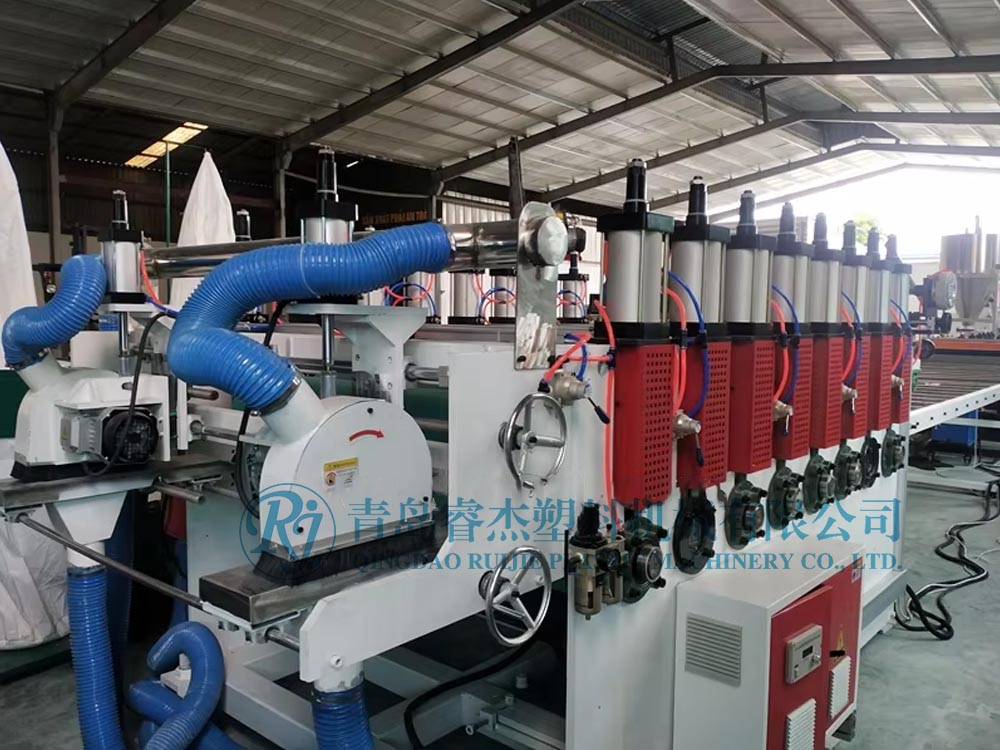
Define Your Production Scope and Profile Specifications
Align plastic profile production line capabilities with target profiles: window frames, decking, wall panels, and WPC composites
When getting started, it makes sense to document what kind of profile applications we're working with so they align properly with our machinery specs. For instance, window frames really need good dimensional stability plus strong impact resistance. Decking products call for UV resistant materials and those anti slip surface treatments. Wall panels? They want consistent colors throughout and usually prefer matte finishes. And then there are WPC composites which require special screw designs to get that even wood polymer mix right. Different applications mean different extruder needs. Twin screw systems work best when dealing with filled or recycled composites because they mix things better. Single screw units handle standard PVC stuff just fine though. Getting the equipment wrong can lead to serious waste problems at startup time, sometimes pushing waste past 15% of total material costs according to Plastics Technology from last year. That's why finding suppliers with actual experience matching materials to profiles matters so much in practice.
Specify dimensional tolerances (±0.1 mm), surface finish class, and calibration precision for consistent output quality
It makes sense to set clear numerical standards before buying materials. For parts where fit matters most, such as window frames, we need tolerances around 0.1 mm, something that laser measuring equipment can check accurately. Surface quality should be defined either through Ra roughness measurements or gloss levels, with Class A finishes reserved for components that will be seen by customers. Getting the calibration right is really important when it comes to how things hold their shape after cooling down. Using vacuum tanks that maintain temperatures within half a degree Celsius across different zones helps keep thick sections from bending out of shape. The haul-off speed needs to match what's coming out of the extruder, which is best handled with those closed loop servo systems. These details aren't just numbers on paper either; according to Polymer Engineering Reports from last year, about one quarter of structural failures trace back to bad calibration. Always remember to write these requirements into the actual purchase contracts so there's no confusion later on.
Select the Optimal Extrusion System for Material and Output Requirements
The right material compatibility makes all the difference when it comes to running a plastic profile production line efficiently. Different plastics like PVC, polyethylene (PE), polypropylene (PP), and various recycled mixtures need their own specific handling regarding heat stability and how they flow when melted. Get the screw geometry wrong - whether it's the compression ratio, flight depth, or length-to-diameter ratio - and the whole production process becomes unstable. Take rigid PVC for instance. This stuff needs really tight temperature control, within about plus or minus 2 degrees Celsius, otherwise it starts breaking down. Recycled materials tell a different story though; they actually perform better when there are more intense mixing sections in the extruder. When screw designs match what the material requires, we see much better melt consistency throughout the system. Profiles come out stronger and cleaner, and manufacturers can cut down on waste significantly, sometimes getting scrap rates below 5% when everything is set up properly in the plant.
Single-screw vs. twin-screw extruders: throughput consistency, mixing performance, and thermal degradation control
For basic profiles running at lower production rates (around 150 kg per hour or less), single screw systems tend to be easier to operate while using less power overall. When dealing with complicated material mixes though, twin screw machines really shine. They handle filled composite materials and recycled blends much better thanks to improved mixing capabilities, and they cut down those annoying thermal hot spots by about a third to forty percent give or take. Most manufacturers find themselves choosing between these options based on what their production volume needs are. Twin screws stay pretty consistent with their output rate variations staying within plus or minus 1.5% when producing over 300 kg per hour. This kind of stability matters a lot for products where dimensions need to stay tight specs, such as making window frames or outdoor decking components where even small inconsistencies can cause problems later on.
Verify Critical Downstream Performance of the Plastic Profile Production Line
Die design impact on weld line integrity, symmetry, startup waste, and profile complexity handling
The shape and design of dies really matters when it comes to making complex parts like those multi chamber window frames we see so much these days. When the flow channels aren't properly balanced, they tend to leave behind weak spots at the corners which can actually become structural problems later on, especially in things that need to hold weight. For asymmetrical shapes, manufacturers have started relying heavily on CFD optimized tooling just to get rid of those pesky differential shrinkage issues. Adaptive dies are changing the game too. They cut down on startup waste somewhere around 35 to 40 percent because of those dynamic lip adjustments. This makes all the difference when working with high end materials like WPC composites where every bit of material counts.
Cooling and calibration system: vacuum tank zoning, temperature control, and haul-off synchronization for ±0.1 mm tolerance
Vacuum calibration tanks that have multiple stages and separate temperature control areas help stop warping issues in products with thick sections such as decking boards. Getting down to a tolerance of plus or minus 0.1 mm needs careful management of how heat is removed. The process typically starts with fast cooling to stabilize the outer layer, followed by slower cooling later on which reduces stress inside the material. When it comes to servo driven haul offs, they need to stay in sync with what the extruder is putting out. If there's even a half percent deviation from this synchronization, we start seeing noticeable changes in dimensions during long production runs. And for materials that absorb moisture like polyamide, controlling humidity during cooling becomes absolutely essential to avoid those annoying surface blemishes that nobody wants to see in finished products.
Evaluate Total Cost of Ownership and Smart Automation Features
When looking at costs beyond just buying the machines themselves, companies need to consider all aspects of total cost of ownership. Energy bills, how often maintenance is needed, what kind of labor force they have available, plus those unexpected shutdowns when something breaks down—all these things matter over time. Spare parts being readily available makes a big difference too, as does making sure technicians know how to handle repairs and understanding what the warranty actually covers for five years of operation. Many top equipment makers are adding smart automation systems now. These include things like early warning signs about potential maintenance issues and live monitoring during extrusion processes. Such technology can cut down on wasted materials somewhere around 15%, though results do vary depending on setup. Smart controls connected to the internet should definitely be high on any manufacturer's priority list. They automatically tweak screw speeds according to melt viscosity measurements and fine tune haul off units to maintain very tight tolerances of about half a millimeter. Most businesses find these investments pay back within roughly 18 to 24 months mainly because of lower energy expenses, plus production runs become significantly more stable with improvements often exceeding 30% in consistency.
Frequently Asked Questions
What are the main considerations for selecting an extrusion system?
Choosing an extrusion system involves evaluating material compatibility, ensuring correct screw geometry, and understanding the production volume needs. This includes temperature control, mixing performance, and flow stability.
Why is dimensional tolerance important in plastic profile production?
Dimensional tolerance, typically ±0.1 mm, is crucial to ensure consistent product quality, proper fit, and to minimize waste. High precision in tolerance helps in maintaining the structural integrity of the profiles.
How does smart automation benefit plastic profile production?
Smart automation helps in reducing material waste by providing early warning signs for maintenance, optimizing extrusion processes, and maintaining tight tolerances. It leads to more stable production runs and lower energy expenses.
