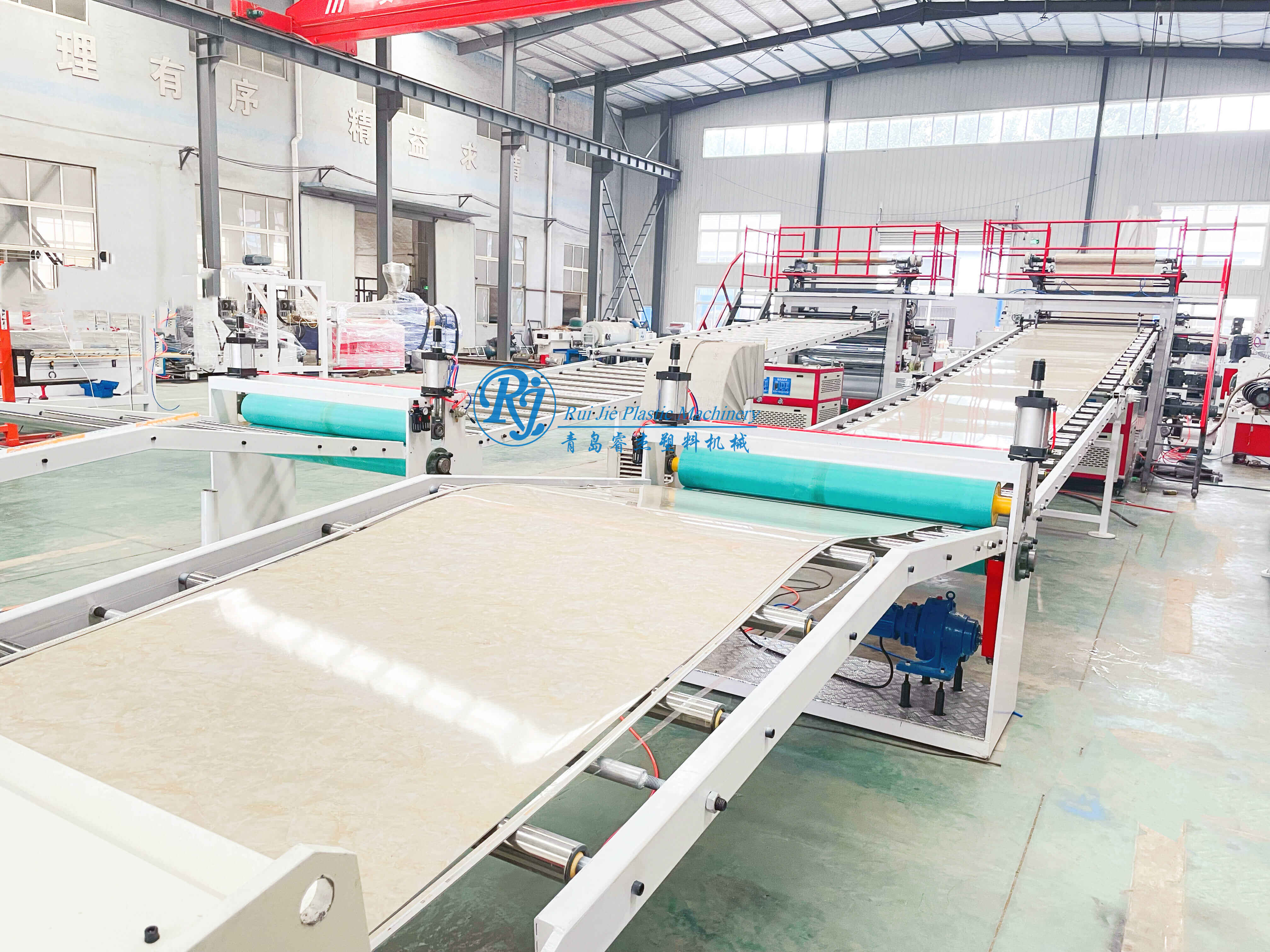
Optimizing PVC Board Extrusion Process Parameters for Surface Quality
Maintaining stable temperatures is really important when it comes to getting consistent quality in PVC board extrusion work. When the heat isn't controlled properly across different sections of the machine, the melted plastic doesn't mix evenly. Even small changes in temperature above or below 3 degrees Celsius can cause problems with how the material flows, resulting in those annoying surface waves or parts that don't measure right. Some research has shown that keeping the barrel at just the right temperature cuts down on those pesky unmelted bits by about half compared to when things get too hot or cold. This makes a big difference in how smooth and shiny the final product looks.
Screw Speed, Melt Temperature Control, and Mitigation of Sharkskin Defects
Screw speed dictates shear intensity and melt temperature:
- Excessively high RPMs raise melt temperature beyond the optimal range (170–190°C), accelerating degradation and causing “sharkskin” surface roughness
- Conversely, speeds below recommended thresholds create inadequate shear, fostering unmixed material pockets that manifest as pinholes
Automated closed-loop temperature systems mitigate these risks by dynamically adjusting cooling rates to maintain ±1.5°C tolerance—ensuring stable melt delivery to the die without thermal overshoot or lag.
Die Temperature Precision and Its Direct Influence on Gloss, Roughness, and Reproducibility
Die temperature uniformity directly correlates with surface aesthetics:
| Temperature Variation | Surface Impact |
|---|---|
| ±2°C across die face | Gloss differentials ≥ 15 GU |
| Consistent within ±1°C | Rz roughness < 3.5 μm |
Precision-heated dies with multi-zone control eliminate thermal gradients, ensuring reproducible high-gloss finishes essential for architectural applications—and reducing post-extrusion rework by up to 25%.
Die Design and Calibration: Critical Levers for Surface Finish in PVC Board Extrusion
Die Land Length, Gap Uniformity, and Flow Distribution Impact on Surface Uniformity
Getting the right die land length and maintaining even gaps matters a lot when it comes to getting consistent material flow throughout production runs. Dies that are properly engineered help reduce those annoying speed differences and stress points in the melted material, which stops those ugly flow lines and streaks from showing up on finished products. According to what many shops have seen in practice, if there's more than 0.05 mm variation in how tight those gaps are set, surfaces tend to get rougher by around 40%. Most companies now rely on precision machining tools along with computer simulations of how materials actually flow through dies. This combination lets them create boards where the finish looks good all over and feels smooth to touch, not just in certain spots but consistently across the whole width.
Cooling Rate, Vacuum Calibration, and Dimensional Stability’s Role in Preventing Orange Peel and Waviness
When we control cooling speeds along with proper vacuum settings, most problems after extrusion just disappear. If things cool down too fast, they end up with those annoying stress marks that look like orange peels on the surface. And if the vacuum isn't balanced properly across the board, we get all sorts of wavy patterns forming. Keeping our temperature controls tight within about plus or minus 2 degrees Celsius cuts down on shape changes by roughly two thirds. Where we put those vacuum ports matters a lot too because it affects how evenly pressure gets applied as materials harden, which helps keep surfaces smooth without warping. Getting this balance right between heat control and mechanical setup makes all the difference when producing high quality PVC sheets that meet strict flatness requirements like what ASTM D4728 specifies.
Lubrication Strategy and PVC Formulation: Balancing Flow, Release, and Surface Perfection
External Lubricants and Processing Aids for Reduced Die Buildup and Enhanced Surface Smoothness
Getting external lubrication right makes all the difference when it comes to producing surfaces free from defects. Lubricants including metallic stearates create a barrier between the hot polymer material and the extrusion tool, cutting down on friction and stopping unwanted deposits from forming. When used at around 0.2 to 0.8 parts per hundred resin, these additives can cut down die residue by about 40 percent and significantly reduce those pesky surface flaws. For even better results, manufacturers often turn to processing aids like acrylic polymers which help mix the material more evenly during processing. This leads to smoother material flow through the system and typically produces surface roughness measurements under 0.8 micrometers according to what we've seen in actual factory settings.
Internal/External Lubricant Imbalance and Resulting Defects: Pinholes, Haze, and Loss of Gloss
Imbalanced lubricant ratios trigger cascading surface defects. Excess internal lubricants accelerate degradation, causing pinholes and haze; insufficient external lubrication promotes die buildup and orange peel textures. Research shows formulations deviating ±0.1 phr from optimal ratios increase defect rates by 30%. The table below summarizes common imbalances and outcomes:
| Imbalance Type | Primary Surface Defect | Secondary Impact |
|---|---|---|
| Excess Internal Lubricant | Micro-pinholes | Reduced tensile strength |
| Excess External Lubricant | Haze/Loss of gloss | Poor interlayer adhesion |
| Inadequate Stabilization | Discoloration | Accelerated UV degradation |
Precision in lubricant selection and dosing eliminates these failures, ensuring consistent optical clarity and mechanical integrity.
Raw Material Purity and Stabilization: Eliminating Root-Cause Surface Defects in PVC Board Extrusion
When contaminants get into PVC resin, including things like moisture, leftover catalysts, or fillers of varying quality, they show up as problems on the surface such as pinholes, fisheyes, and haze. If the moisture content goes over 0.1% in the raw materials, it creates these tiny bubbles from volatiles that mess with the surface quality. The chemistry used for stabilization matters just as much. Without enough thermal stabilizers, the polymer starts breaking down during extrusion processes, which leads to carbonization appearing as black spots or rough patches on the product. Good stabilizer combinations stop this molecular breakdown and keep the melt consistent so the final product retains its glossy finish. Companies also rely on automated gravimetric feeding systems to maintain consistent formulations across batches, cutting down on those annoying variations that lead to uneven flow patterns and wavy surfaces. Taking all these factors together when ensuring material purity cuts down defects by around 40% and makes the finished boards last longer under UV exposure, meeting most industry standards for durability.
Frequently Asked Questions
What is the significance of temperature control in PVC board extrusion?
Temperature control is crucial as even small variations can affect the consistency and quality of the PVC boards, leading to surface defects like waves or improper measurements.
How does screw speed affect the surface quality of PVC boards?
Uneven screw speeds can cause inadequate shear, which results in unmixed material pockets leading to pinholes or surface roughness. Automated systems help in maintaining optimal speeds.
Why is die temperature precision important?
Precise die temperature ensures uniform surface aesthetics, preventing gloss differentials and roughness. It aids in creating reproducible high-gloss finishes, necessary for premium applications.
What role do lubricants play in PVC board extrusion?
Lubricants reduce die buildup and enhance surface smoothness. They create a barrier that minimizes friction and prevents surface flaws.
How does raw material purity affect PVC board extrusion?
Contaminants in raw materials can cause surface defects like pinholes and haze. Ensuring raw material purity helps maintain the board's surface quality and durability.
Table of Contents
- Optimizing PVC Board Extrusion Process Parameters for Surface Quality
- Die Design and Calibration: Critical Levers for Surface Finish in PVC Board Extrusion
- Lubrication Strategy and PVC Formulation: Balancing Flow, Release, and Surface Perfection
- Raw Material Purity and Stabilization: Eliminating Root-Cause Surface Defects in PVC Board Extrusion
- Frequently Asked Questions
