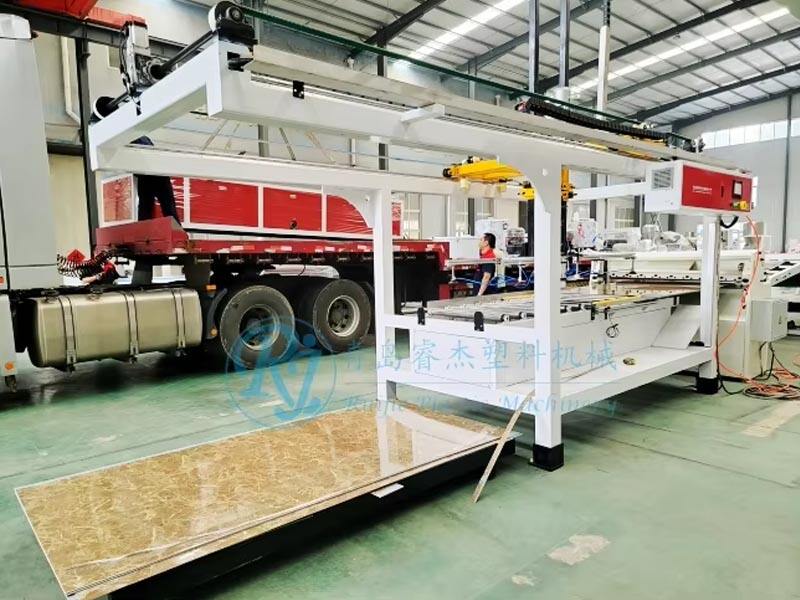
Core Components of PVC Marble Sheet Raw Materials
Polyvinyl chloride (PVC) resin as base material in artificial marble sheet manufacturing
PVC resin serves as the base material for making artificial marble sheets, giving them the necessary strength and lasting power. Most manufacturers go with suspension grade PVC because it offers reliable quality and works well during processing. When mixed in, this resin acts like glue holding everything together, creating a solid structure that can withstand regular wear and tear plus exposure to different weather conditions. What makes PVC really valuable is how adaptable it is. Companies can tweak their formulas depending on what they need from the final product, whether it's extra toughness or something else, all while keeping manufacturing costs reasonable. This flexibility explains why so many producers stick with PVC despite having other options available.
Calcium carbonate as filler material enhancing rigidity and cost-efficiency
Calcium carbonate, or CaCO3 for short, acts as an important filler material in many manufacturing processes. What makes it so valuable is how it adds stiffness to products while cutting down on overall costs since it replaces some of the pricier polymer components. Most manufacturers tend to incorporate between 40% and 60% calcium carbonate by weight in their formulations. When mixed correctly into the material, this mineral not only helps materials resist catching fire but also keeps them from becoming too brittle over time. Another big plus? The inherent white color of calcium carbonate works really well with pigments during coloring processes. This means products end up looking brighter and more consistent across different batches, which is especially noticeable in things like plastic surfaces where appearance matters a lot.
Role of plasticizers in flexibility and processability of PVC marble sheets
When added to PVC resin, plasticizers change how the molecules behave, effectively reducing the material's glass transition temperature. This makes the resin much easier to work with during processes like extrusion and calendering while also giving it better flexibility. The result? Manufacturing runs smoother overall, and products come out with decent impact resistance that holds up well during installation in different environments. Environmental regulations and growing awareness about chemical safety have pushed many manufacturers to switch to non-phthalate alternatives. These newer options perform almost as well as traditional plasticizers but come with better safety records for workers and consumers alike. Of course there's a tradeoff involved here. Companies typically pay around 20 to 30 percent more for these safer materials, which remains a significant consideration for budget-conscious operations.
Performance-Enhancing Additives: Stabilizers, Modifiers, and Lubricants
Thermal and UV stabilizers for long-term durability in indoor and outdoor applications
PVC marble sheets need thermal and UV stabilizers to stop them from breaking down when exposed to heat and sun. These additives help prevent problems like fading colors, getting too brittle, and losing their strength over time. The thermal ones basically handle all that heat stuff both when making the sheets and throughout their actual use. Meanwhile, UV stabilizers work against those damaging rays from the sun. When combined properly, these components let the sheets keep looking good and working well for around 15 years outside. That makes them pretty reliable even in places where weather conditions vary quite a bit from day to day.
Impact modifiers for improved toughness in high-stress environments
When impact modifiers are added to PVC materials, they create tiny rubber particles throughout the material structure. These particles work like shock absorbers, taking in and spreading out energy when something hits the surface. For places where people walk around a lot or where heavy items might fall, this makes all the difference. Some tests show that materials with these additives can handle impacts three times better than regular PVC without them. The real-world applications matter too. Think about shopping malls or office buildings where things get bumped into walls regularly. With improved impact resistance, surfaces stay intact longer against falling objects, moving furniture, or those occasional knocks we all make. This means not only does the material last longer structurally, but it also keeps looking good over time instead of getting dented and scratched easily.
Internal and external lubricants for optimized melt flow and die release
Lubricants play a key role in making processing work smoothly. Internal types help cut down on friction between molecules so materials can flow better during melting. External ones stop molten PVC from sticking to machine parts. When manufacturers pick the right lubricant for their needs, they see several improvements. The pigments and fillers spread out more evenly throughout the material. Factories can save around 20% on energy costs during extrusion processes. Products come out with uniform thickness and a smoother surface overall. These factors mean fewer rejected batches and faster production runs across the board. Plants that get this right often report significant reductions in waste and rework time.
Achieving Aesthetic Fidelity with Pigments and Pattern Replication
Pigments and dyes for realistic color and natural marble veining effects
High-performance inorganic pigments deliver the rich, authentic colors needed to mimic natural marble. To ensure longevity, especially in sun-exposed installations, these pigments must exhibit excellent lightfastness. Specialized dispersion techniques replicate natural veining patterns, requiring precise control over pigment concentration to maintain visual consistency and avoid mottling or streaking.
Masterbatch technology for consistent pattern replication in PVC marble sheets
Masterbatch technology ensures uniform pigment distribution by delivering concentrated blends of colorants and additives into the PVC matrix. This method supports accurate replication of complex stone patterns across large production runs, minimizes waste, and streamlines the coloring process during extrusion, resulting in visually consistent, high-quality sheets.
Lightfastness and dispersion quality in pigment selection for premium finishes
Premium finishes demand pigments rated Grade 7-8 on the Blue Wool Scale for superior resistance to UV-induced fading. Effective dispersion prevents agglomeration, ensuring smooth surfaces free of specks or uneven color. Homogeneous pigment distribution also contributes to mechanical performance by maintaining material uniformity throughout the sheet.
Balancing Cost, Quality, and Sustainability in Raw Material Selection
Optimizing filler loading and resin purity for mechanical performance and surface finish
Getting the mix right between calcium carbonate fillers and pure PVC resin matters a lot for quality products. More filler means lower material costs, but go too far and the product starts showing weakness in impact resistance plus rough surfaces when the mixture isn't properly distributed throughout. When making high-end items, aim for resin purity above 98 percent generally speaking, while adjusting filler amounts somewhere around 15 to maybe 25 percent based on what kind of strength the final item needs. This approach keeps things durable enough while still maintaining that nice marble effect look customers want so much these days.
Phthalate vs. non-phthalate plasticizers: Performance trade-offs and regulatory trends
Manufacturers are moving away from phthalate-based plasticizers mainly because of stricter regulations and what people want these days when it comes to safer products. Sure, phthalates do give that extra flexibility for cheaper prices, but companies are finding that non-phthalate options work just as well while being better for both workers and the environment. We're seeing this change happen across many industries, especially in the production of PVC marble sheets where material choices have a big impact on everything from worker safety to product durability. Some factories report they've cut down on health incidents since switching over, which makes sense given what we know about long-term exposure risks.
Shift toward recycled PVC and bio-based additives in sustainable sheet manufacturing
The push for sustainability is making recycled PVC and bio-based additives much more common in manufacturing these days. Many top companies have started using around 30% post-consumer recycled PVC material in their products, and they still manage to keep the same strength and durability as before. This cuts down on the need for brand new raw materials quite a bit. Then there are those bio-based plasticizers and stabilizers made from things like vegetable oils or other renewable sources. These ingredients not only boost the green factor of the final product but also work just as well as traditional ones according to industry tests. For businesses looking at both environmental impact and bottom line savings, this combination makes perfect sense for moving toward a circular economy model where waste becomes resource again and again.
Supplier evaluation and quality control protocols for consistent raw material supply
Good supplier checks and solid quality control matter a lot when trying to keep things consistent from one batch to another. We look at several important factors during production testing including how big those filler particles are, what the molecular weight of the resin is, and whether additives meet purity standards. These tests help stop unexpected changes in product characteristics. There are standard measurements too like melt flow index, how stable something stays under heat, and color matching across batches. All these numbers give manufacturers confidence about how materials will behave during processing and ultimately perform in finished products.
Future Trends and Innovations in Artificial Marble Composite Materials
Hybrid composites: Integrating crushed natural marble with PVC resins
When manufacturers blend crushed natural marble with PVC resins, they create hybrid composites that bring together the authentic look of real stone with all the benefits of modern polymer technology. Adding those natural elements actually makes the veining patterns look much more realistic while also boosting how hard and scratch resistant the surfaces become. These kinds of materials work really well in busy commercial areas like shopping malls or office buildings where both appearance matters and things need to last a long time. Looking at market trends, Grand View Research predicts the US composite market will expand at around 5.6 percent annually between now and 2030. This growth comes from architects and builders seeking out new ways to construct spaces that combine beauty with practical performance requirements.
Advancements in additive technologies for enhanced durability and aesthetics
The field of additive science is making big strides in how materials perform both functionally and visually. We're seeing nanotechnology combined with smart composite materials create surfaces that actually repair themselves when damaged, plus they stand up better against everyday wear and tear from the environment. The colors and patterns look much more realistic now too, thanks to these improvements. Impact resistance has gotten better while UV protection keeps fading at bay for longer periods. When manufacturers integrate CAD/CAM systems into their workflow, they get incredible design accuracy. This means customers can enjoy custom made surfaces that resist stains and last decades longer than old school artificial marble options did back in the day.
Emerging market demands shaping next-generation PVC marble sheet formulations
The push from consumers and regulations alike is pushing companies to develop new formulas that green up their products while still delivering good results. People want stuff made with recycled materials these days, plus they're looking for things with plant-based ingredients too. Fireproofing properties matter a lot now, along with better insulation against heat loss. Surfaces that don't need constant cleaning are becoming must-haves for many applications. Industry players have started creating complex composite systems that manage to keep costs down while standing up to wear and tear over time. These innovations help maintain PVC marble sheets' position in both home improvement projects and bigger commercial ventures where sustainability standards continue to rise across the board.
FAQ Section
What is PVC resin used for in marble sheet manufacturing?
PVC resin serves as the base material, providing strength and durability to artificial marble sheets.
How does calcium carbonate benefit PVC marble sheets?
Calcium carbonate acts as a filler material, enhancing rigidity and reducing costs by replacing pricier polymer components.
Why are plasticizers added to PVC marble sheets?
Plasticizers increase flexibility and processability, making the manufacturing process smoother and improving impact resistance.
What role do stabilizers play in PVC marble sheets?
Stabilizers, including thermal and UV types, enhance long-term durability by preventing degradation from heat and sunlight.
How do pigments achieve realistic marble effects?
Pigments are carefully dispersed to replicate natural marble veining and color, aided by masterbatch technology for consistency.
Why is sustainability important in raw material selection?
Sustainability is prioritized through recycled PVC and bio-based additives, reducing environmental impact and promoting a circular economy.
What are hybrid composites?
Hybrid composites integrate crushed natural marble with PVC resins to enhance aesthetics and durability.
Table of Contents
- Core Components of PVC Marble Sheet Raw Materials
- Performance-Enhancing Additives: Stabilizers, Modifiers, and Lubricants
- Achieving Aesthetic Fidelity with Pigments and Pattern Replication
-
Balancing Cost, Quality, and Sustainability in Raw Material Selection
- Optimizing filler loading and resin purity for mechanical performance and surface finish
- Phthalate vs. non-phthalate plasticizers: Performance trade-offs and regulatory trends
- Shift toward recycled PVC and bio-based additives in sustainable sheet manufacturing
- Supplier evaluation and quality control protocols for consistent raw material supply
- Future Trends and Innovations in Artificial Marble Composite Materials
-
FAQ Section
- What is PVC resin used for in marble sheet manufacturing?
- How does calcium carbonate benefit PVC marble sheets?
- Why are plasticizers added to PVC marble sheets?
- What role do stabilizers play in PVC marble sheets?
- How do pigments achieve realistic marble effects?
- Why is sustainability important in raw material selection?
- What are hybrid composites?
