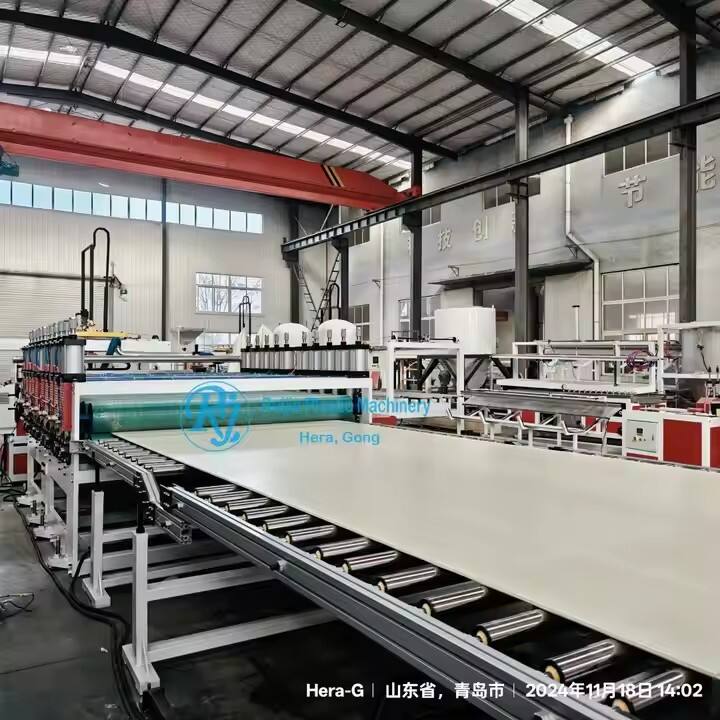
PVC Foam Board Production : Sustainable Blowing Agents and Eco-Compliant Foaming Chemistry
Legacy chemical approaches in PVC foam board production face mounting regulatory pressure and environmental concerns. ADCA (azodicarbonamide) blowing agents release hazardous decomposition byproducts—including urea, carbon monoxide, and nitrogen oxides—contributing to VOC emissions, groundwater contamination risks, and occupational inhalation hazards under REACH and EPA guidelines.
Phasing Out ADCA: Regulatory Drivers and Environmental Impact of Legacy Blowing Agents
Most regulatory bodies have put strict limits on ADCA usage because of its harmful emissions and the energy intensive process needed to break it down. Research shows that when manufacturers use ADCA for foaming processes, they end up creating around 40% more carbon emissions compared to newer materials available today. Switching to these approved alternatives cuts down on environmental risks while making boards stronger over time. The old chemical leaves behind acidic residues that slowly eat away at product quality, something that simply doesn't happen with contemporary solutions being adopted across the industry right now.
Halogen-Free Alternatives (e.g., Alve-One®): Performance, Cell Uniformity, and Processing Stability
Halogen free blowing agents like Alve One provide better thermal stability when used in extrusion processes around 160 to 180 degrees Celsius. This helps maintain consistent melt viscosity and cuts down on production stoppages by about 15 percent compared with traditional ADCA systems. The material reaches cell uniformity of over 98 percent at densities under 0.5 grams per cubic centimeter, which is really important for things like structural components in marine composites. Plus, the closed cell structure makes them much more resistant to moisture, so boards perform better both during manufacturing and when they're actually being used in damp conditions.
Precision Extrusion & Foaming Control for Consistent Board Architecture
Celuka, Free-Foam, and Co-Extruded Architectures: Die Design, Melt Temperature, and Surface Quality Trade-offs
When making PVC foam boards, manufacturers adjust their properties using three main extrusion methods, each requiring careful attention to die shape, heat distribution, and material flow characteristics. The Celuka process creates boards with solid outer layers and expanded inner sections by controlling flow through specially designed channels, usually operating around 185 to 205 degrees Celsius. Free-foam technique lets the material expand completely during processing, though this needs strict temperature control to prevent problems on the surface appearance. For added functionality, co-extrusion applies different materials layer by layer through adjustable dies. This approach enables specific features like protection against sunlight damage or better shock absorption while keeping the board's structural strength intact for various applications.
| Architecture | Melt Temperature Range | Surface Quality | Primary Application |
|---|---|---|---|
| Celuka | 185–205°C | High-gloss finish | Signage, furniture |
| Free-foam | 170–190°C | Matte texture | Insulation panels |
| Co-extruded | 175–195°C per layer | Customizable | Marine/outdoor use |
Temperature extremes pose clear trade-offs: excessive heat improves cell uniformity but risks blistering; insufficient heat leads to incomplete foaming and density variation. Die design must account for PVC’s viscoelastic response to prevent warping—especially when targeting ±0.3mm dimensional tolerance, which demands precision-machined tooling.
Intelligent Cooling Systems: In-Line IR Monitoring and Adaptive Chiller Integration for Dimensional Stability
How boards cool after extrusion really determines their flatness and how consistently dense they turn out. When heat doesn't spread evenly during cooling, around a quarter of standard production batches end up warped. Newer manufacturing lines use infrared cameras to check surface temps every half second, catching any spots that are more than 2 degrees off from normal. These readings help control chillers that adjust coolant flow through different sections of the line, keeping things within the sweet spot of 40 to 60 degrees Celsius as materials solidify. The system also includes several stages of air knives that can change speed, water baths that spray differently depending on where they're applied, and smart software that tweaks cooling based on how humid the surrounding air is. All together, this setup cuts down on shape distortion caused by temperature stress by almost two thirds, lets factories run at steady speeds of up to eight meters per minute, and maintains the kind of uniform density needed for structural applications.
Digitalization in PVC Foam Board Production: AI-Driven Process Optimization
Real-Time Density and Thickness Prediction Using Load Cells, Torque Analytics, and Edge AI
Process control powered by artificial intelligence changes how we approach quality assurance, moving away from just checking samples after problems happen to actually predicting issues before they occur. By combining multiple sensors, including load cells that measure extrusion pressure along with torque analysis looking at motor resistance, these systems can spot tiny changes in material consistency long before any visible flaws show up on production lines. The edge computing AI processes all this information extremely fast, under 25 milliseconds actually, which lets it forecast when density might start going off track in real time operations. If the system detects that predicted values go beyond plus or minus 0.05 grams per cubic centimeter, it will adjust the amount of blowing agent being injected automatically. This kind of responsive feedback loop reduces wasted materials by around 17 percent and completely removes the need for destructive testing methods. IndustryWeek reported similar results back in 2023.
Closed-Loop Quality Control: From Predictive Maintenance to Auto-Calibrated Thickness Compensation
Modern production facilities now combine physical components with smart systems throughout their operations. When it comes to maintenance, vibration analysis keeps an eye on those extruder bearings and can spot potential problems well over three days before they actually fail, cutting down unexpected stoppages by around forty percent. At the same time, these lines use infrared technology across their entire width to check material thickness every single second, which then prompts automatic changes to the die gaps so we stay within a very tight range of plus or minus 0.15 millimeters. The calendar rolls themselves adjust automatically too, taking into account how temperature affects materials. They look at current conditions from sensors placed around the area plus past performance records, which helps fine tune when heat is applied. This approach saves about eleven percent on energy costs overall.
Circular Economy Integration: Recycled Feedstock and Formulation Resilience
Using recycled PVC in manufacturing brings some serious environmental benefits. Just looking at post-industrial regrind materials, companies can cut down on landfill waste by around 40%, which is pretty impressive when we think about all the plastic waste ending up in landfills. But there's a catch. The problem comes from inconsistent polymer chain lengths, varying amounts of plasticizers, and unpredictable contaminant levels. These issues make it tough to maintain consistent product quality, especially when trying to get uniform density and smooth surfaces on finished products. Smart manufacturers tackle this challenge with closed-loop recycling systems where they track every batch of material from start to finish. They also rely on special additives called compatibilizers that help fix damaged polymer chains during the foaming process. With these approaches, most plants manage to include between 30% and 50% recycled content while still meeting performance requirements. Some exciting new technologies are now emerging that break down complex waste plastics back into raw materials similar to virgin PVC. This depolymerization process cuts carbon emissions by roughly a quarter compared to traditional methods of making PVC from scratch. For the industry to truly embrace circular economy principles, though, we need better coordination on material recovery standards and more collaborative research efforts focused on optimizing how these next generation foam boards actually perform in real world conditions.
FAQ: Sustainable Blowing Agents and PVC Foam Boards
What are blowing agents and why are they important in PVC foam board production?
Blowing agents are substances used to create foam's cellular structure during production. They are crucial for achieving the desired density and texture in PVC foam boards, impacting their quality and performance.
Why is there a shift from ADCA blowing agents?
ADCA blowing agents release harmful byproducts that contribute to environmental pollution and pose health risks. Regulatory pressures and environmental concerns drive the industry towards safer alternatives.
How do halogen-free alternatives improve PVC foam board production?
Halogen-free alternatives, like Alve-One®, offer better thermal stability and processing efficiency, resulting in higher quality boards and reduced environmental impact.
What role does digitalization play in PVC foam board production?
Digitalization through AI and smart systems optimizes production processes by enabling real-time monitoring, predictive maintenance, and closed-loop quality control, leading to enhanced efficiency and reduced waste.
How does integrating recycled PVC benefit manufacturers?
Integrating recycled PVC reduces landfill waste and lowers carbon emissions. It poses challenges due to inconsistent quality but can be managed through closed-loop systems and compatibilizers to maintain product standards.
Table of Contents
- PVC Foam Board Production : Sustainable Blowing Agents and Eco-Compliant Foaming Chemistry
- Precision Extrusion & Foaming Control for Consistent Board Architecture
- Digitalization in PVC Foam Board Production: AI-Driven Process Optimization
- Circular Economy Integration: Recycled Feedstock and Formulation Resilience
