Material Composition and Production Fundamentals
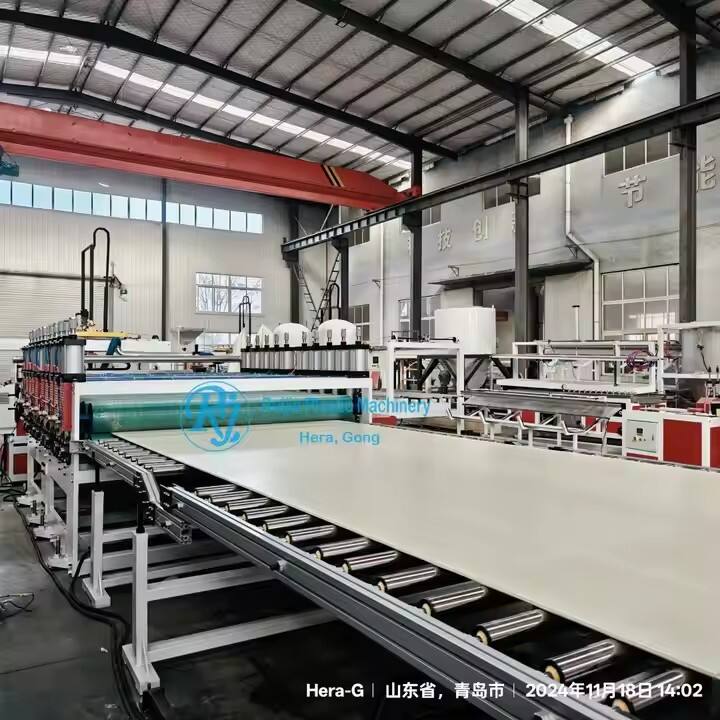
PVC Foam Board: Homogeneous Polymer Structure and Controlled Foaming Process
The structural consistency of PVC foam board comes from an extrusion process that's carefully balanced between PVC resin and chemical foaming agents as they expand under controlled conditions. What results is a pretty uniform closed-cell structure with densities usually falling somewhere between 0.45 to 0.85 grams per cubic centimeter. This helps eliminate those annoying directional weaknesses we often see in fibrous composite materials. The material's isotropic strength means CNC machining can maintain tight tolerances around plus or minus 0.2 millimeters. And because it absorbs almost no moisture (just about 0.1% according to ASTM D570 standards), it stays dimensionally stable even when exposed to changing humidity levels. That makes it ideal for applications where moisture control matters a lot, such as in cleanrooms or food processing facilities where dimensional integrity is absolutely essential.
WPC Board: Wood-Plastic Hybrid Limitations – Fiber Variability, Moisture Sensitivity, and Additive Dependency
Wood plastic composites (WPC) come with some pretty big manufacturing headaches because they're made from such different materials mixed together. When those wood fibers get spread out unevenly in the mix (usually around 30 to 70 percent of the total weight), it creates weak spots that can really mess with how strong the final product is. Some batches might be much weaker than others, sometimes as much as 30 percent difference in bending strength. Even when companies try to protect them with special coatings, these composite materials still soak up between 3 and 8 percent moisture when humidity gets above 85%. That kind of expansion isn't good news for clean rooms or places where food gets processed. Manufacturers have to throw in extra stuff like compatibilizers and stabilizers at rates between 5 and 12 percent just to keep things from falling apart. This adds anywhere from $120 to $200 per ton to production costs and makes recycling a real pain too. On the flip side, regular old PVC foam stays almost completely pure (98%) throughout its whole life cycle, which is why many industries still prefer it despite what looks like better environmental credentials from WPC on paper.
Performance Benchmarking for Industrial Environments
Water Resistance and Dimensional Stability in High-Humidity Production Facilities
PVC foam board’s closed-cell structure delivers near-zero water absorption—demonstrating minimal dimensional change after 24-hour immersion (ASTM D570), unlike WPC, which swells up to 12%. This hydrophobic stability eliminates warping risks in facilities with ≥85% relative humidity, reducing maintenance costs by 34% compared to WPC, according to 2023 durability studies.
UV Resistance, Thermal Cycling, and Long-Term Color Retention (ASTM G154/Q-SUN Data)
Tests following ASTM G155 standards reveal that PVC foam maintains around 95 percent color stability even after spending 4,000 hours inside Q-SUN xenon arc chambers. That's way better than what we see with wood plastic composites which tend to fade about 30 percent under exactly the same conditions. What makes this possible? Well, PVC foam has a uniform polymer structure that naturally fights off UV damage without needing any kind of protective coating on top. This property makes it particularly good for things like signs that need to stay outside all year round or building exteriors that get exposed to sun and rain. When subjected to extreme temperature changes ranging from minus 20 degrees Celsius up to 80 degrees Celsius, PVC foam only expands by less than 0.3 percent compared to WPC materials that expand roughly 2.1 percent during similar tests. Such minimal expansion means joints between panels remain intact even when buildings experience significant temperature swings, something that happens regularly in places like industrial warehouses where temperatures can fluctuate dramatically throughout the day.
Fire Performance: ASTM E84 Class A Compliance of PVC Foam Board vs. WPC’s Inherent Limitations
The PVC foam board gets those top marks on the ASTM E84 test for fire resistance, hitting Class A standards with flame spread below 25 and smoke density under 450. That's because of how it puts itself out when things get hot. Tests back in 2022 showed something pretty clear: once the flame source goes away, this stuff stops burning in about 3 seconds flat. Compare that to wood plastic composites which kept going strong for well over a minute after being lit, usually landing somewhere around Class C territory. For anyone working with HVAC systems or electrical equipment where fire safety matters most, switching to PVC foam isn't just smart it's actually required by code in many cases these days.
Mechanical Behavior and Manufacturing Compatibility
CNC Machinability, Surface Finish Consistency, and Edge Quality in High-Volume Signage Production
The uniform composition of PVC foam boards makes them ideal for high speed CNC routing operations. When cut at speed, they produce clean chips that result in smooth edges and consistent finishes needed for commercial signs and display panels. Wood plastic composites tell a different story altogether. The random distribution of wood particles often leads to frustrating fiber tear outs that damage both the material and cutting tools. PVC foam avoids these problems completely. Tool wear stays predictable across runs, and there's no risk of layers separating when making detailed cuts. Manufacturers report seeing anywhere from 15% to 20% better productivity in their production lines when switching to PVC foam. Less rework means fewer interruptions, which translates directly into real money saved over time for sign shops running multiple shifts daily.
Load-Bearing Capacity, Flexural Modulus, and Application-Specific Suitability Analysis
The flexural modulus of PVC foam boards ranges from about 1500 to 2500 MPa, which is around 30 percent better than what we see with WPC materials that typically fall between 800 and 1400 MPa. This means when comparing similar thicknesses, PVC can handle more weight before bending. When put under constant pressure over time, PVC doesn't really show much creep behavior and stays stable dimensionally even when humidity reaches 80% according to ASTM D1037 standards. Wood plastic composites tend to expand by roughly half a percent under these conditions though. In environments where temperatures fluctuate between minus 20 degrees Celsius all the way up to 60 degrees, PVC foam remains reliable for years without warping issues or problems with screws coming loose. That makes this material a good choice for things like building exteriors, heavy duty storage racks, and protective covers for machinery.
Total Cost of Ownership for PVC Foam Board Manufacturers
Raw Material Predictability, Extrusion Efficiency, and Waste Reduction vs. WPC’s Blending Complexity
The production of PVC foam boards works best with consistent polymer mixtures that keep raw materials uniform throughout the process. This leads to better extrusion results and cuts down on startup waste significantly - around 15 to 22 percent less than what happens with WPC products made from mixed wood plastic blends. Those WPC blends need constant adjustments because the fibers aren't consistent enough. Speaking of specifics, PVC foam has a density range between 0.5 and 0.7 grams per cubic centimeter. This controlled density means the extrusion process goes much quicker while using less energy overall. When manufacturers are making those big panels for industrial applications like building exteriors, these efficiency gains really start to matter for both cost savings and production timelines.
Lifecycle Economics: Maintenance, Replacement Frequency, and Warranty Implications in Cladding Applications
The fact that PVC foam board doesn't let water through and stands up well against UV rays means it actually saves money over time when used outside. Looking at what happens in practice, most field tests indicate that after ten years, maintaining PVC cladding costs around $3.50 to $4.20 per square meter. That's way cheaper than the $7.80 to $9.60 per square meter needed for wood plastic composite materials because there's just not as much staining, warping issues, or mold problems to deal with. What makes this even better is how long these boards last. In places where humidity is always high, they tend to stay good for 15 years or more, beating out typical WPC products which usually only last between 8 and 12 years before needing replacement. The difference shows up in warranty claims too. Companies that make PVC foam report about 30 percent fewer customer complaints overall. Some top brands have started offering warranties lasting all the way to 20 years now something simply not possible with those WPC options that get affected so easily by moisture.
FAQ
What is the main advantage of PVC foam boards over WPC?
PVC foam boards offer higher dimensional stability, better resistance to moisture, UV rays, and fire, making them more suitable for industrial applications.
How long do PVC foam boards last compared to WPC?
PVC foam boards can last up to 15 years or more, even in high humidity conditions, whereas WPC typically lasts between 8 to 12 years.
Are PVC foam boards more cost-effective?
Yes, PVC foam boards are more cost-effective due to lower maintenance costs and longer lifespans, resulting in reduced replacement frequency and better warranty terms.
What makes PVC foam boards better for CNC machining?
The uniform composition of PVC foam boards leads to cleaner cuts, consistent surface finishes, and predictable tool wear, enhancing productivity in signage production.
